
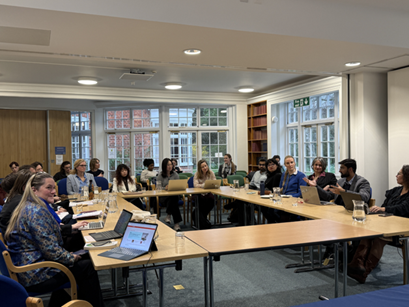
“…addressing the planetary crisis requires not only stronger commitments, but also stronger legal frameworks, institutional coherence, and practical implementation mechanisms.” Adv Ayman Cherkaoui (Lead Counsel, CISDL / Director, Hassan II Intl Centre for Enviro Training / Deputy Chair, IUCN World Commission on Environmental Law IUCN WCEL)
CISDL Lead Counsel for Climate Change, Adv. Ayman Cherkaoui underscores the urgency of strengthening environmental law and governance following key global milestones, including UNFCCC COP30 and the 2025 IUCN World Conservation Congress. While noting progress under the Kunming–Montreal Global Biodiversity Framework, he highlights the need for stronger legal frameworks, institutional coherence, and effective implementation.
Emphasising the interdependence of climate, biodiversity, and sustainable development, he calls for global commitments to be translated into enforceable national action. Legal innovation, litigation, capacity-building, and international cooperation, he stresses, are critical to turning ambition into real-world impact.
Adv Ayman Cherkaoui is the Director of the Hassan II International Center for Environmental Training and holds the position of Deputy Chair of the IUCN World Commission on Environmental Law (IUCN WCEL). He also served as a Special Advisor for Climate Change and Negotiations to the COP22 Presidency.
To listen to his insights on how the key outcomes of the UNFCCC COP30 and IUCN WCC 2025 set the stage for the CBP COP 17 and UNFCCC COP 31 in 2026, please watch this video.
Turning Biodiversity Commitments into Action: Emerging challenges and opportunities for legal innovations
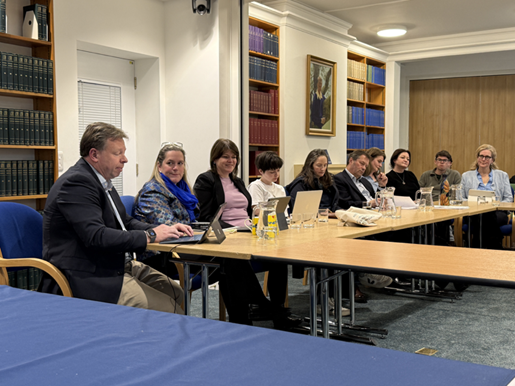
“…We clearly need innovative thinking. We clearly need legal innovations to address the huge challenges that we are facing, not only in the climate change area, but also in the biodiversity conservation, sustainable use, and the fair and equitable sharing of benefits arising from the utilization of genetic resources.” Prof Jorge Cabrera (Univ Costa Rica / Lead Counsel, CISDL / Legal Advisor, National Biodiversity Institute)
Professor Jorge Cabrera, a leading jurist at the University of Costa Rica, highlights the urgent need for innovative legal approaches to address the interconnected challenges of climate change, biodiversity loss, and sustainable development. While recognising progress under the Global Biodiversity Framework, he underscores the difficulty many countries face in aligning national laws with global targets. He identifies emerging legal issues from biodiversity finance to digital sequence information and Indigenous rights—alongside and persistent challenges such as wildlife trafficking and invasive species. Emphasising the growing role of jurisprudence, he calls for stronger legal frameworks, greater policy coherence, and enhanced international cooperation to ensure effective implementation and deliver meaningful outcomes for both people and nature.
Professor Jorge Cabrera has contributed to the drafting of Access and Benefit-Sharing laws in several countries and authored over 100 articles and technical reports.
To listen to his insights on how the key outcomes of the UNFCCC COP30 and IUCN WCC 2025 set the stage for the CBP COP 17 and UNFCCC COP 31 in 2026, please watch this video:
From “30×30” Target to Reality: The Social Dimensions of Conservation
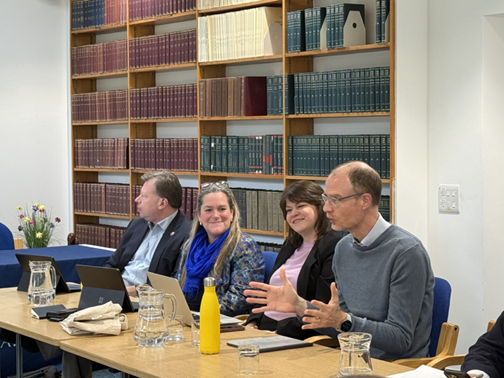
“I spent most of my career not engaging at all with international processes and kind of global governance, and I’ll be honest, I was probably quite skeptical…But in the last few years, I have started to change that…and actually found them to be incredibly rich and interesting and, kind of fulfilling spaces…” Prof Chris Sandbrook (Director, Univ Cambridge Conservation Research Institute)
Conservation social scientist Professor Chris Sandbrook of the University of Cambridge offers an interdisciplinary perspective on global biodiversity governance, drawing on his background in conservation science and social research. While acknowledging ongoing inefficiencies, he highlights the value of international forums as spaces for learning, exchange, and big-picture thinking.
He points to the growing influence of emerging technologies, private sector engagement, and the rising visibility of Indigenous peoples and underrepresented groups. Reflecting on the “30×30” target, he emphasises that conservation is as much a social development challenge as an environmental one. Despite their imperfections, he is certain that global governance processes remain essential—particularly as the focus shifts to implementation ahead of CBD COP17 and the 2030 deadline.
Professor Chris Sandbrook is a prominent conservation social scientist and the Director of Cambridge Conservation Research Institute at the University of Cambridge with research focuses on the relationship between biodiversity conservation and society, with a particular emphasis on the social and political implications of digital technologies for conservation.
Listen to the Opening Message of Prof. Chris Sandbrook on the significance of international law and governance in setting the stage for CBD COP17 and UNFCCC COP31 in 2026:
Law in Action: Turning Climate and Biodiversity Commitments into Results
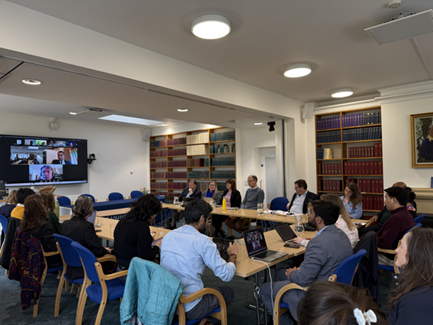
“In a period of rapid environmental change and the geopolitical uncertainty… Law is possibly the most powerful tool you have to build trust, mobilize capital for change, and protect the public interest. When used well, it does not slow transition, it rather makes it possible.” Adv Michael Strauss (General Counsel, European Bank for Reconstruction and Development (EBRD))
EBRD General Counsel Mike Strauss highlights the critical role of law and governance in turning global climate and biodiversity commitments into tangible action. Speaking from the EBRD, he emphasizes that implementation—through national legislation, regulatory frameworks, and institutional mandates—is now the key challenge for sustainability. He stresses the need to integrate climate, nature, and development law, aligning legal frameworks with NDCs, biodiversity targets, and financial regulations to enable coherent markets and capital flows. Lawyers, he notes, are central as architects of solutions, shaping legislation, contracts, safeguards, and accountability mechanisms that drive systemic transitions. Looking ahead to COP17, partnerships between MDBs, legal professionals, civil society, and Indigenous communities will be essential to deliver a just and effective path to a sustainable future.
Adv. Mike Strauss is an experienced legal professional with a distinguished career in international development finance and public policy. He has served on the Board of the Asian Development Bank and as Senior Advisor for International Finance at the U.S. Treasury, where he worked on global financial and development issues. He currently serves as General Counsel of the European Bank for Reconstruction and Development (EBRD), where he leads legal strategy and supports the institution’s mission to advance sustainable, market-oriented transitions.
Beyond Protected Areas: Legal Innovations and OECMs after the IUCN World Conservation Congress 2025
Legal experts representing the academe, industry, international organizations, and NGOs discuss the contribution of the outcomes of the IUCN World Conservation Congress 2025 to the legal and institutional implementation of the Kunming–Montreal Global Biodiversity Framework, particularly Target 3 and the recognition of OECMs. The discussion highlights emerging legal and governance innovations aimed at closing ambition gaps ahead of COP31, including the growing role of Other Effective Area-Based Conservation Measures (OECMs) as flexible, rights-based approaches that expand conservation beyond formal protected areas and better recognize Indigenous land stewardship.
Experts also examine the increasing influence of advisory opinions in climate law, noting their role in grounding legal obligations in scientific evidence and clarifying states’ human rights responsibilities. They discuss how hosting COPs can strengthen national institutions and civil society engagement, while underscoring the need for stronger legal frameworks, enforcement mechanisms, and evolving concepts such as ecocide. At the same time, concerns are raised about weak accountability in global financial systems, alongside innovative perspectives that frame soil and ecological networks as integrative foundations for future biodiversity and climate governance.
Looking ahead, the role of Armenia as host of CBD COP17 (18–30 October 2025) is seen as both a moment for reassessment and an opportunity to foster regional cooperation and dialogue. Experts emphasize the importance of transparency, inclusivity, and cross-sector collaboration to counter bad-faith actors and advance integrated action across the biodiversity–climate nexus. The session also featured a new study, Global Lessons for Policy and Practice: Advancing Legal and Policy Frameworks for OECMs, developed by the Biodiversity Law and Governance Initiative, WWF, and CISDL.
Experts include Prof Jorge Cabrera (Univ Costa Rica / Lead Counsel, CISDL); Dr Daniel Ruiz De Garibay Ponce (Senior Lecturer, Asia Pacific University of Technology, and Innovation / Coordinator, BLGI); Adv Tejas Rao (Senior Manager, CISDL) as chairs and Adv Tim Scott (Senior Policy Advisor, UNDP); Dr. Harry Jonas (Senior Director, WWF-US / Co-Chair, IUCN WCPA OECM Specialist Group); Adv Nina Pindham (Cornerstone Barristers); Adv Elizabeth Nwarueze (DPhil Candidate, Univ Oxford); Ms Tsovinar Hovhannisyan (Director, ArAves Nature Conservation NGO / Conservation Programs Manager, FPWC); Adv Emily Julier (Counsel, Hogan Lovells); Prof Konstantia Koutouki (Prof, Univ Montreal); Ms Jojo Mehta (Co-Founder & CEO, Stop Ecocide International) as intervenors.